A Journey of Progress: Three Years of Redefining Sustainable Logistics
In today’s rapidly evolving world, supply chains are expected to do far more than move goods efficiently. They must reduce environmental impact, strengthen resilience and contribute to inclusive economic growth. Sustainability is no longer a parallel agenda, it is becoming central to how businesses operate, innovate and compete. Recognizing this shift, TCI and IIM Bangalore came together three years ago to establish the TCI–IIMB Supply Chain Sustainability Lab, a collaborative initiative built on a shared vision of creating supply chains that are efficient, resilient and environmentally responsible. As the Lab completes three impactful years, it stands as a strong example of what industry expertise and academic rigor can achieve together.
Building India’s Sustainability Knowledge Infrastructure
The transition to low-carbon logistics begins with one critical foundation: credible and measurable data. Without robust measurement systems, sustainability remains an aspiration. With the right tools, it becomes actionable. Over the past three years, the Lab has focused on building this foundation for India’s logistics ecosystem by developing practical solutions, generating evidence-based insights and adapting global sustainability frameworks to Indian realities.
Measuring What Matters
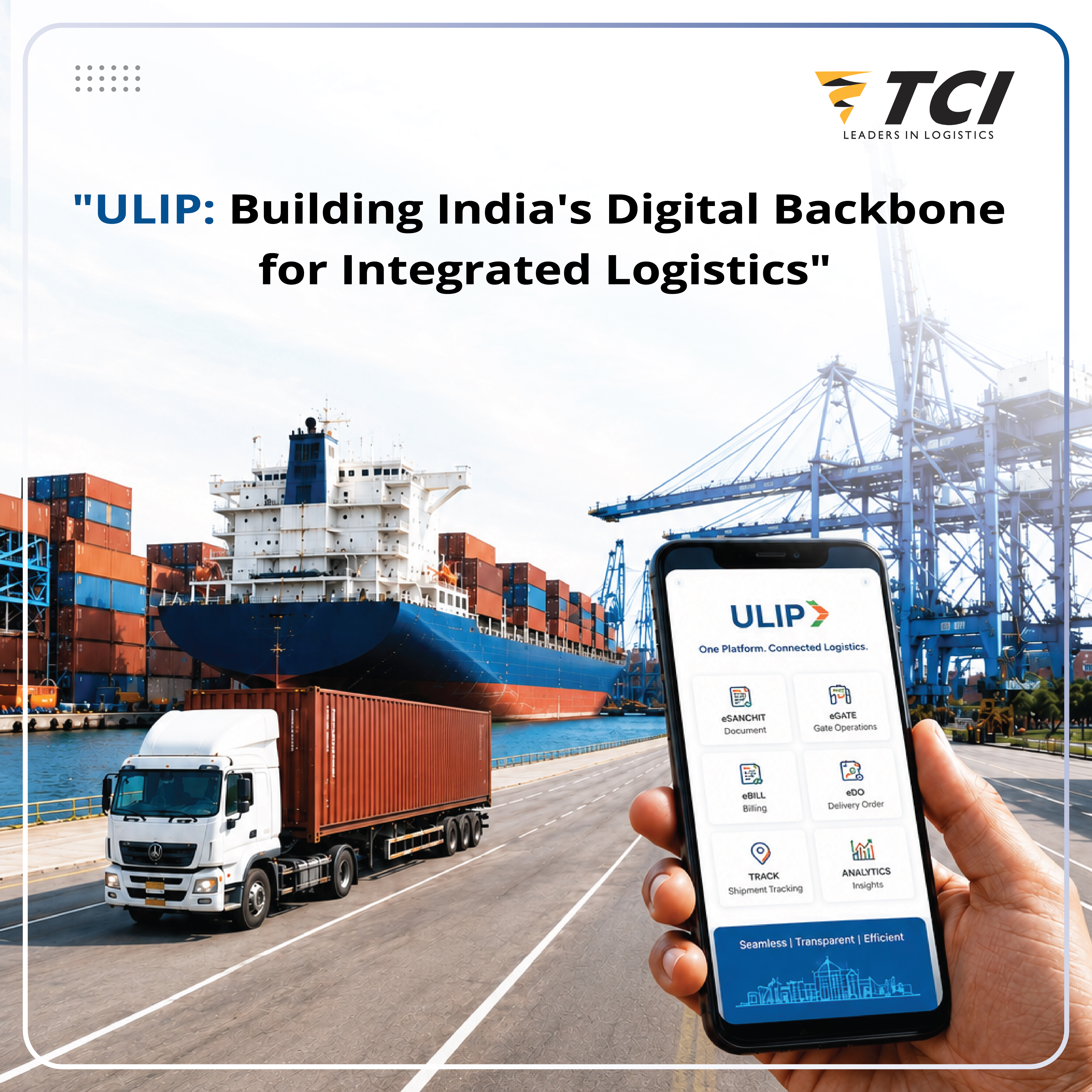
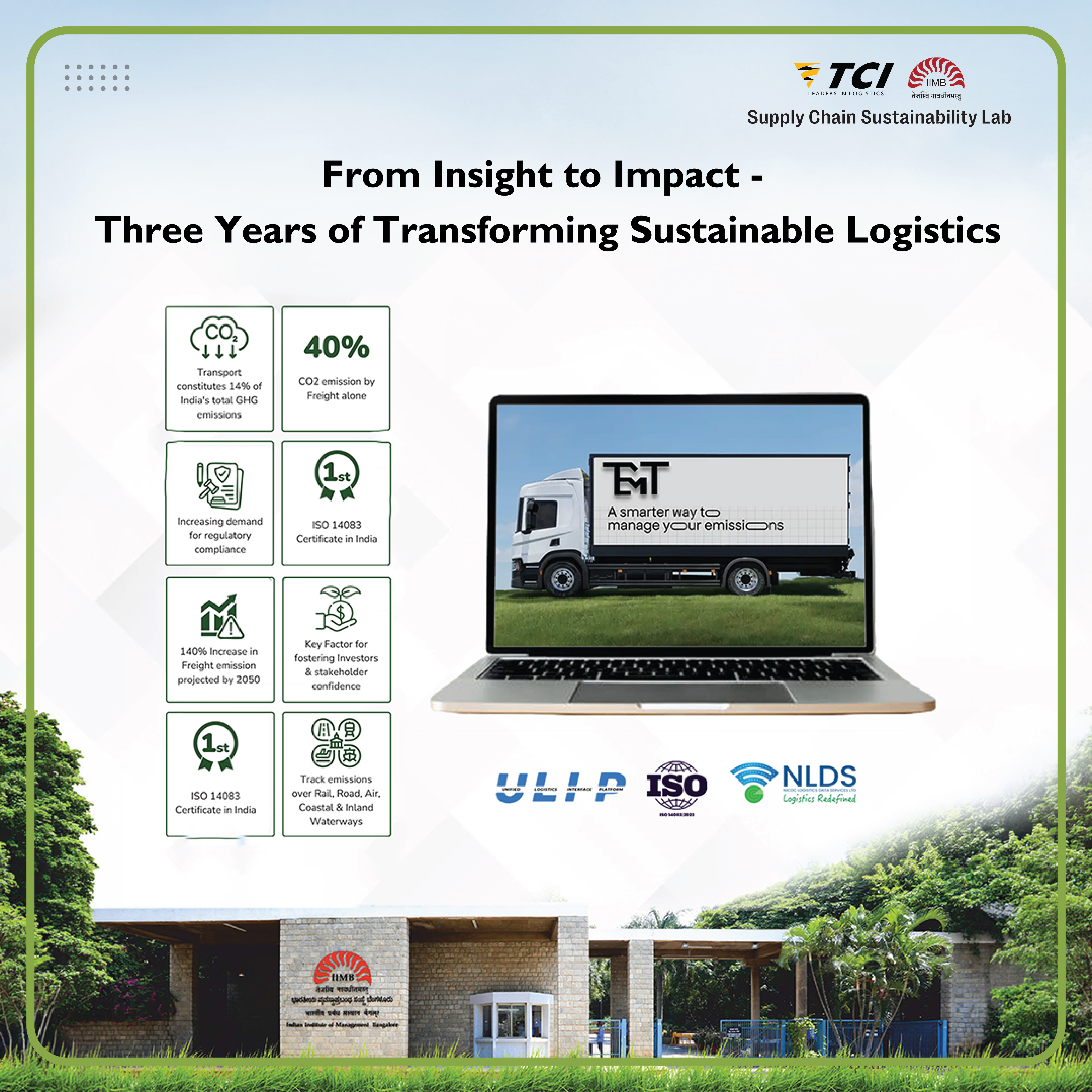
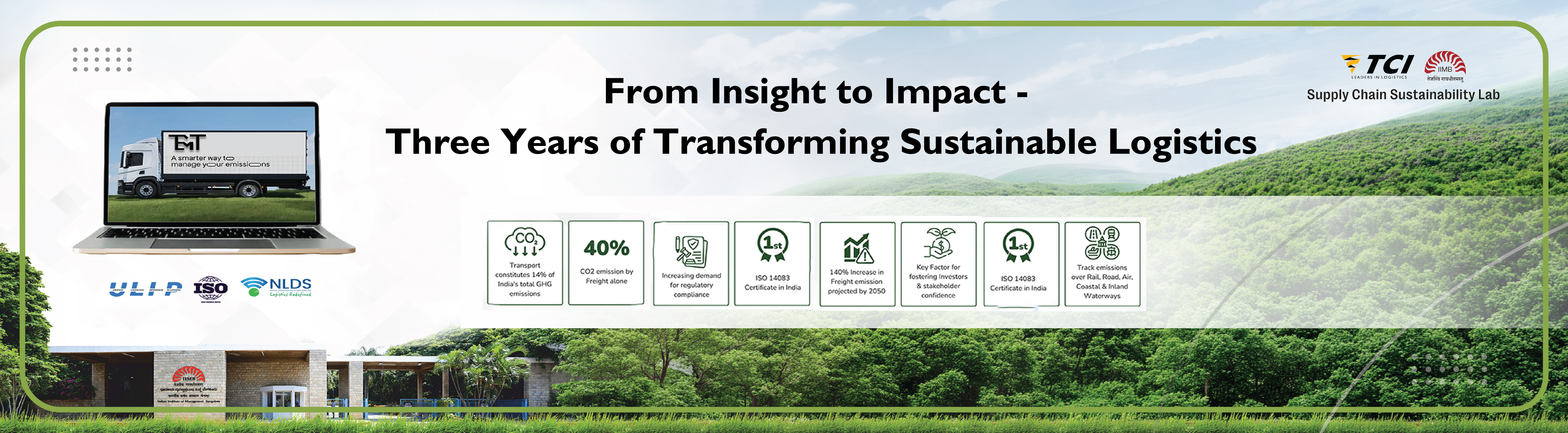
One of the Lab’s landmark achievements is the Transportation Emission Measurement Tool (TEMT) - an ISO 14083-aligned platform designed to measure greenhouse gas emissions across road, rail, air and sea freight. What makes TEMT unique is its India-centric approach. By incorporating domestic freight emission factors and local operating conditions, the tool delivers emission estimates that are scientifically robust and operationally relevant. In a major milestone, TEMT has been formally adopted by the Department for Promotion of Industry and Internal Trade (DPIIT) and integrated with the Unified Logistics Interface Platform (ULIP), paving the way for standardized emissions accounting across India’s logistics sector. This journey, from research innovation to government adoption, reflects the power of applied research in shaping national capability.
Enabling Policy and Industry Transformation
Sustainable transformation requires collaboration between industry, academia and policymakers. The Lab has actively contributed to national conversations on zero-emission freight, electric trucking and charging infrastructure through initiatives such as the NITI Gear Shift Hackathon and the Bharat ZET Policy Advisory Workshop. At the same time, the Lab has supported corporates and MSMEs through research and advisory initiatives on Internal Carbon Pricing, green financing and ESG integration, helping businesses navigate the transition to a low-carbon future with confidence.
Shaping Standards for the Future
The Lab’s impact extends beyond projects and research. Through participation in the International Organization for Standardization (ISO/TC 344) Technical Committee and the Bureau of Indian Standards (BIS) Transport Services Sectional Committee, the Lab continues to contribute to the development of standards that will guide sustainable logistics practices in India and globally.
Advancing Through Collaboration
Meaningful systems change is never achieved in isolation. Over the past three years, the Lab has partnered with organizations such as Smart Freight Centre, Bureau of Energy Efficiency, TIFAC, IIT Madras, EMPRI and the Centre for Environment Education to strengthen research, innovation and implementation at scale.
Building Capability for a Sustainable Future
A sustainable future requires informed leadership and widespread awareness. To expand access to sustainability education, the Lab launched India’s first dedicated MOOC on ESG and Sustainability through IIM Bangalore in both English and Hindi. Through executive programs, industry forums and academic engagements, the Lab continues to build capability across the supply chain ecosystem.
Looking Ahead
The last three years have shown that sustainability in logistics is not just a technological challenge - it is a strategic opportunity to redesign systems for long-term value creation. As the TCI–IIMB Supply Chain Sustainability Lab enters its fourth year, its mission remains clear: to accelerate India’s transition toward cleaner, smarter and more resilient supply chains through knowledge, innovation and collaboration. The journey so far reinforces a powerful belief, when sustainability is backed by rigorous measurement, collaborative action and practical implementation, meaningful transformation becomes not just possible, but inevitable.